
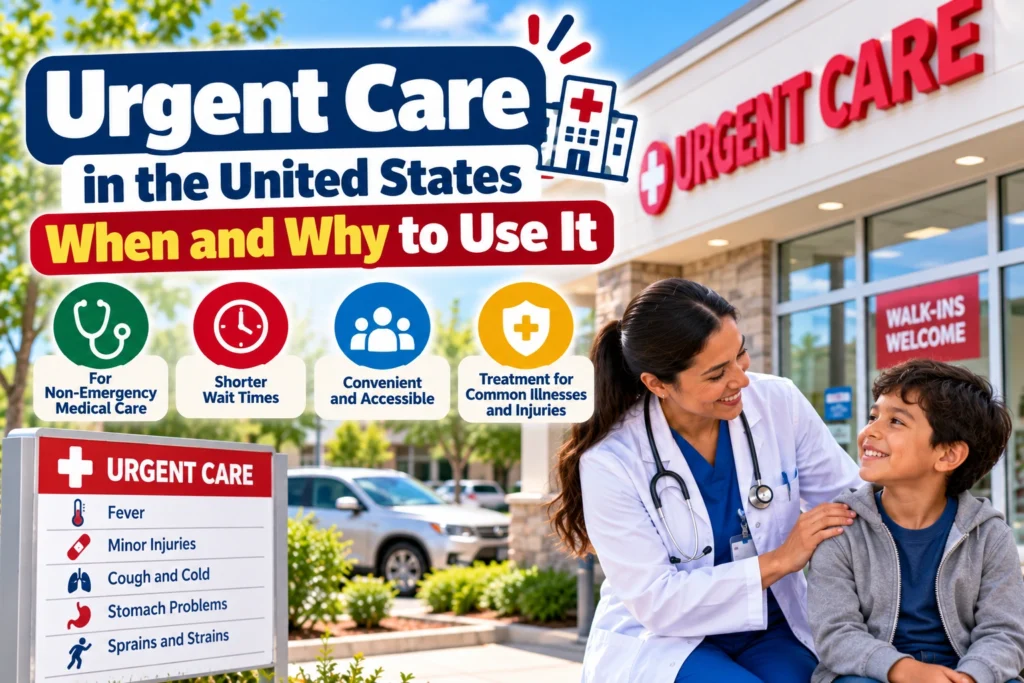
Urgent Care clinics are medical facilities designed to treat illnesses and injuries that need prompt attention but are not life-threatening emergencies. They are commonly used when a person cannot get a same-day appointment with their regular doctor but does not need the level of care provided in a hospital emergency department.
According to MedlinePlus, urgent care can be appropriate when a health problem is concerning and needs timely treatment, but there is no immediate threat to life or risk of permanent disability. MedlinePlus
🩺 What Is Urgent Care?
Urgent Care centers provide walk-in medical care for many common health problems. Some locations accept patients without an appointment, while others may allow online scheduling.
These clinics can be especially useful during evenings, weekends, or times when a primary care provider is unavailable.
Urgent care is different from an Emergency Room (ER). Emergency departments are equipped to handle severe or life-threatening conditions, while urgent care is generally intended for less serious medical needs. MedlinePlus
🤒 What Conditions Can Urgent Care Treat?
Urgent care clinics commonly evaluate and treat minor illnesses and injuries, including:
- 🤧 Colds and flu-like symptoms
- 👂 Earaches
- 😷 Sore throats
- 🌡️ Low-grade fevers
- 🤕 Minor headaches or migraines
- 🩹 Minor cuts and burns
- 🦴 Sprains and some minor fractures
- 👁️ Minor eye injuries
- 🌿 Limited skin rashes
MedlinePlus notes that these are examples of problems that may be appropriate for an urgent care clinic when they are not life-threatening. MedlinePlus
🚨 When Should You Go to the Emergency Room Instead?
Urgent Care should not be used for serious medical emergencies.
You should call 911 or seek emergency medical care immediately for symptoms such as:
- ❤️ Severe chest pain or pressure
- 😮💨 Serious difficulty breathing
- 🧠 Sudden difficulty speaking, walking, seeing, or moving
- 🩸 Severe or uncontrolled bleeding
- 😵 Loss of consciousness
- ⚡ Severe head, neck, or spinal injuries
- 🔥 Serious burns
- 🚑 Other potentially life-threatening conditions
MedlinePlus emphasizes that emergency treatment should not be delayed when a person’s life or long-term health may be at risk. MedlinePlus
💵 Is Urgent Care Less Expensive Than the Emergency Room?
In many situations, urgent care may cost less than an emergency department visit.
MedlinePlus states that emergency department treatment can cost significantly more than the same type of care received in a provider’s office, and health insurance plans may also charge higher copayments for emergency care. MedlinePlus
However, prices vary depending on the clinic, medical services provided, insurance coverage, tests, medications, and location.
Before receiving care, patients may want to ask about:
- 💳 Insurance coverage
- 💵 Estimated visit cost
- 🧾 Copayments and deductibles
- 🧪 Additional testing fees
- 💊 Prescription costs
🏥 Do Urgent Care Clinics Accept Insurance?
Many urgent care centers accept private health insurance, Medicare, or other coverage, but participation varies by clinic.
Patients should verify whether a facility is in-network with their insurance company before visiting whenever possible.
People without insurance can also ask whether the clinic offers self-pay rates, payment plans, or discounted prices.
👨👩👧 Can Children Use Urgent Care?
Many urgent care facilities treat children, although services and age requirements vary.
For a child with a non-life-threatening illness or minor injury, urgent care may be appropriate when a pediatrician is unavailable. However, serious symptoms such as severe breathing difficulty, major bleeding, seizures, or serious injury require emergency care. MedlinePlus
📋 What Should You Bring?
When visiting an urgent care center, it may help to bring:
- Identification
- Health insurance card
- Current medication list
- Information about allergies
- Medical history when relevant
- Payment method
Having this information available can make the registration and treatment process easier.
✅ Choosing the Right Level of Care
Urgent Care can be a convenient option for same-day medical care when a condition needs attention but is not an emergency.
The most important step is choosing the correct level of care. When symptoms may be life-threatening, call 911 or go to the nearest emergency department instead of waiting for treatment at an urgent care clinic.
For reliable health information about deciding between urgent care and emergency care, patients can consult MedlinePlus, a service of the U.S. National Library of Medicine.
Urgent Care
Learn when to use Urgent Care, when to contact your doctor, and when emergency medical treatment may be necessary using reliable U.S. health information.
Official health information: MedlinePlus – U.S. National Library of Medicine