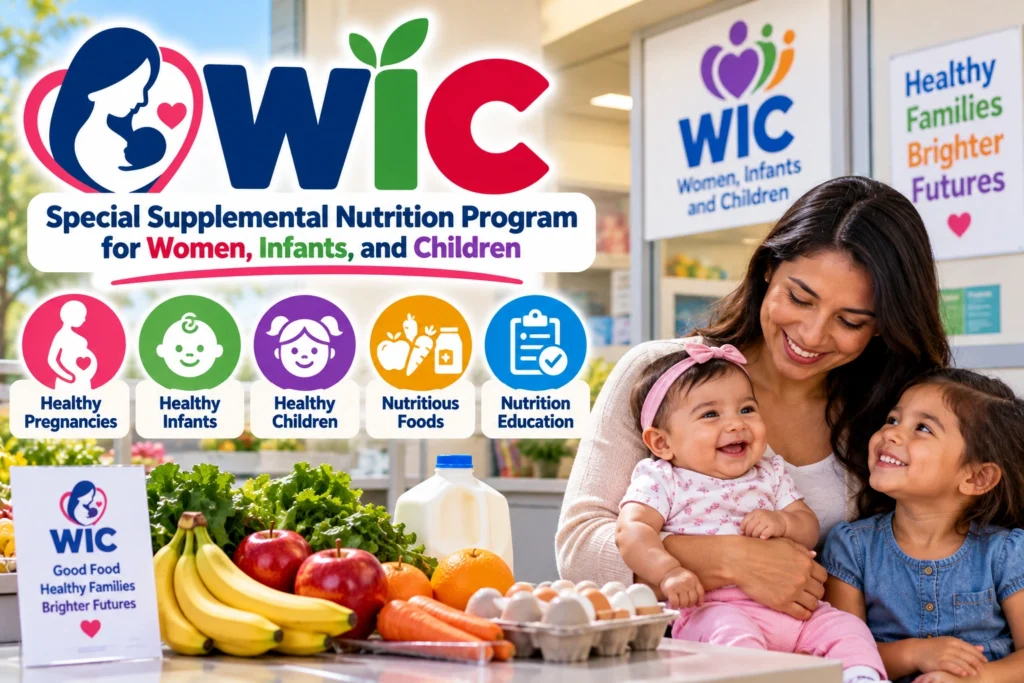
The WIC program, formally known as the Special Supplemental Nutrition Program for Women, Infants, and Children, is a federal U.S. initiative designed to support the nutrition and well-being of pregnant women, new mothers, infants, and young children who meet certain eligibility requirements.
WIC is administered by the USDA Food and Nutrition Service and offers several forms of support, including supplemental foods, nutrition education, breastfeeding guidance, and referrals to other health and social services. WIC Works
🥦 What kind of help does WIC provide?
WIC is more than a food assistance program. Its approach combines nutrition assistance, education, and guidance to help families improve their diets during important stages of child development.
Its main services include:
- 🛒 Benefits to purchase certain nutritious foods.
- 🍎 Nutrition Education.
- 🤱 Breastfeeding support and guidance.
- 👶 Nutrition monitoring for infants and young children.
- 🩺 Referrals to medical and social services available in the community.
WIC food packages are designed to supplement participants’ diets and may vary according to category, age, and nutritional needs. WIC Works
👩🍼 Who may be eligible for WIC?
WIC serves specific groups, including pregnant women, postpartum women, breastfeeding women, infants, and children under age five.
Eligibility generally considers several factors:
Categorical eligibility: belonging to one of the groups covered by WIC.
Residency requirement: living in the state where the application is submitted.
Income eligibility: meeting applicable income limits or certain criteria linked to other programs.
Nutritional risk: having a nutritional need or risk identified during the required assessment. WIC Works
Some requirements may vary by state, so it is always best to check with the WIC agency where you live.
🤱 Breastfeeding support
One of WIC’s best-known components is its Breastfeeding Support. The program may provide information, counseling, and support throughout the breastfeeding period.
Depending on the local agency and each participant’s needs, breastfeeding counselors and other support resources may also be available.
The official WIC website explains that the program helps mothers address breastfeeding questions and provides information throughout different stages of the process. WIC Breastfeeding
🍓 What foods can WIC include?
Specific benefits depend on the participant category and current program rules. Food packages may include combinations of fruits, vegetables, cereals, milk, eggs, whole grains, and other approved foods.
The goal is to supplement the diet and support nutrition appropriate to the needs of women, infants, and children.
That is why WIC food benefits are not exactly the same for every family.
📝 How do you apply for WIC?
Applications are submitted through the WIC agency for the applicable state or territory.
During the process, applicants may be asked for information about identity, residency, income, and other details needed to determine eligibility. A nutrition-related assessment is also completed.
Receiving other public benefits does not automatically mean everyone qualifies for WIC, although certain programs may make it easier to establish income eligibility. WIC Works
💚 A program focused on nutrition and child development
WIC can be an important resource for families that need nutrition guidance during pregnancy and the early years of a child’s life.
In addition to offering healthy food benefits, the program aims to encourage healthy habits and connect families with resources available in their communities.
Availability and requirements may change, so always review official USDA information before applying.
WIC
Review official information about nutrition benefits, healthy foods, pregnancy support, breastfeeding, and services for children under age 5 through the WIC program.
Official source: U.S. Department of Agriculture – Food and Nutrition Service