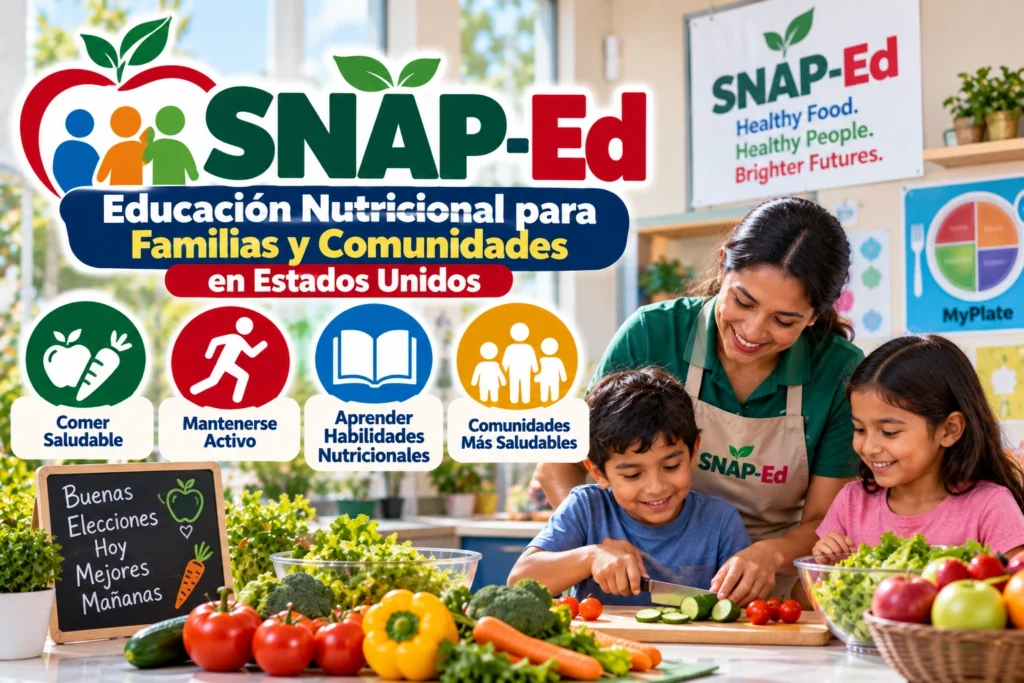
SNAP-Ed, short for Supplemental Nutrition Assistance Program Education, is a nutrition education initiative connected to SNAP and the U.S. Department of Agriculture (USDA). Its goal has been to help people and families eligible for SNAP develop healthier eating habits, manage food resources more effectively, and maintain a physically active lifestyle. Snap Ed
Unlike SNAP, which provides food-purchasing benefits to eligible people, SNAP-Ed focuses mainly on nutrition education, health promotion, and community strategies related to balanced eating.
🍎 What does SNAP-Ed teach?
One of SNAP-Ed’s main goals is to show that healthy eating can also be planned on a limited budget. Its educational programs have included practical recommendations about healthy eating, meal planning, food selection, and physical activity. Snap Ed
Topics traditionally included in its initiatives include:
- 🥦 Eating fruits and vegetables.
- 🛒 Shopping planning and responsible budget use.
- 🍽️ Preparing healthy meals at home.
- 💧 Choosing beverages with less added sugar.
- 🏃 Physical activity and reducing sedentary behavior.
- 🧼 Food safety and proper food handling.
The SNAP-Ed evaluation framework includes areas such as Healthy Eating, Food Resource Management, physical activity, and food safety. Snap Ed
💰 Healthy eating on a limited budget
An important feature of the program is its focus on healthy eating on a budget. The guidance does not simply explain which foods are nutritious; it also aims to teach people how to organize the money available for food purchases.
For example, SNAP-Ed initiatives may provide guidance on making a shopping list, comparing options, using foods already available at home, and preparing simple meals.
The USDA has stated that SNAP-Ed helps people eligible for SNAP learn how to stretch their resources, buy and prepare healthy meals, and stay physically active. Snap Ed
🏫 Education in different communities
SNAP-Ed activities have taken place in different settings, including schools, community organizations, and other places where eligible populations live, learn, or carry out daily activities.
In addition to direct nutrition education, SNAP-Ed has used communication campaigns and strategies related to Policy, Systems and Environmental Changes (PSE). These efforts are designed to make healthy choices more accessible within communities. Snap Ed
❤️ Prevention and well-being
Balanced eating and physical activity are important for overall well-being and can help reduce risk factors associated with chronic disease.
For this reason, SNAP-Ed strategies have been connected to health promotion, obesity prevention, and voluntary adoption of healthy behaviors. Program guidance has indicated that interventions should be evidence-based and aligned with federal nutrition recommendations. Snap Ed
👨👩👧👦 Who can benefit?
SNAP-Ed has primarily served people eligible for SNAP and communities with a high proportion of low-income residents. However, the availability of classes, materials, and activities may vary by state and by the organizations implementing local initiatives.
It is also important to distinguish SNAP benefits from SNAP-Ed: receiving nutrition education does not automatically mean receiving SNAP financial benefits. SNAP eligibility and applications are handled separately.
📚 Official SNAP-Ed resources
The USDA maintains educational resources related to nutrition, interventions, and SNAP-Ed materials. Its official library includes resources on healthy eating, physical activity, and food security.
SNAP-Ed
Review information and resources about nutrition education, healthy eating, physical activity, and food budget management related to SNAP-Ed.