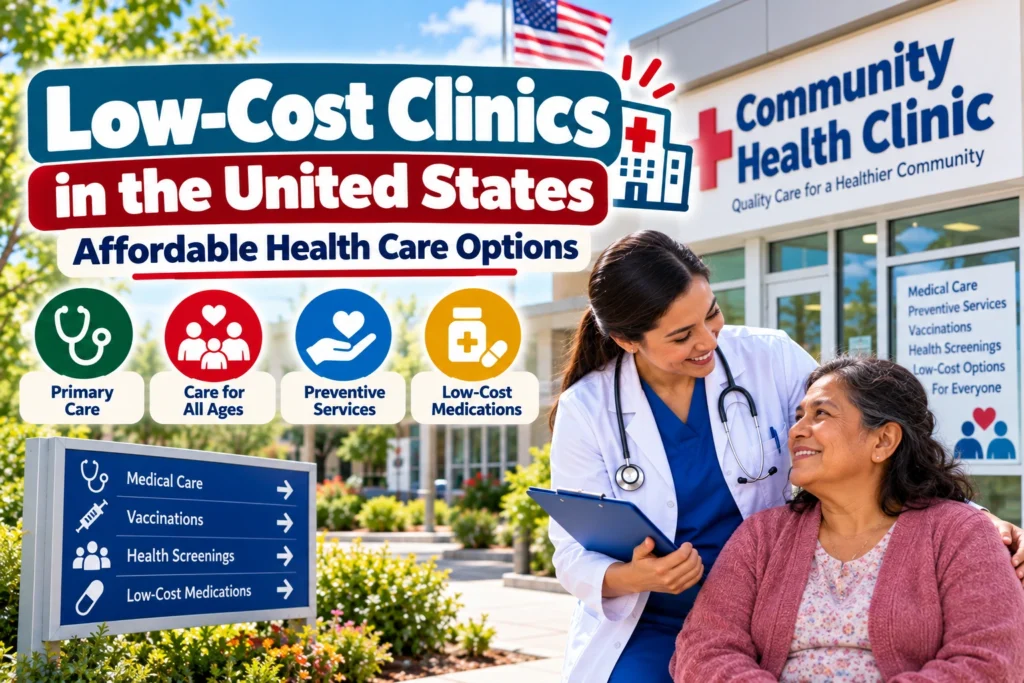
Finding affordable medical care can be difficult for people who do not have health insurance or who have limited income. In the United States, there are several options for receiving low-cost health care, especially through community health centers and federally supported clinics.
The Health Resources and Services Administration (HRSA) helps fund health centers across the country that provide medical and dental services regardless of whether a patient has insurance. In many cases, the amount a patient pays depends on income and household size. ARS Salud
💙 What Are Low-Cost Clinics?
Low-cost clinics are health care facilities that offer services at reduced prices for people who may have difficulty paying the full cost of medical care.
Many of these facilities are Federally Qualified Health Centers (FQHCs) or other community-based health centers.
These centers are designed to serve medically underserved communities and provide primary care regardless of a person’s ability to pay. Fees may be adjusted through a sliding fee scale based on income. HealthCare.gov
👨⚕️ What Services May Be Available?
Services vary by clinic, but many health centers may offer:
- 🩺 Primary Care
- 🦷 Dental services
- 🧠 Mental and behavioral health care
- 👶 Pediatric care
- 🤰 Prenatal care
- 💉 Vaccinations
- 🧪 Preventive screenings
- 💊 Prescription assistance or pharmacy services
- ❤️ Chronic disease management
Some facilities may also provide referrals for specialty care, substance use treatment, or HIV/AIDS services. HealthCare.gov
💵 What Is a Sliding Fee Scale?
A sliding fee scale means that the amount a person pays may be reduced according to their income and family size.
For example, someone with limited income may pay less for an appointment than a patient with a higher income.
This does not necessarily mean that every service will be free. Costs and discount policies can differ from one clinic to another.
HRSA states that people can use community health centers whether or not they have health insurance, and payment is generally based on a sliding scale. ARS Salud
🧾 Can Uninsured People Receive Care?
Yes. One of the main advantages of federally supported health centers is that they provide services to people with or without health insurance.
People who are uninsured can contact a nearby clinic and ask about:
- Available discounts
- Income requirements
- Identification documents
- Appointment availability
- Payment plans
- Services offered
HealthCare.gov specifically recommends community health centers as an option for people who cannot afford a health plan or do not qualify for certain coverage programs. HealthCare.gov
🏥 Are There Other Reduced-Cost Programs?
Yes. HRSA also provides information about the Hill-Burton Program.
Certain hospitals, nursing homes, and other facilities participating in this program are required to provide a specific amount of free or reduced-cost care to people who cannot afford medical services.
Eligibility can depend on household income and family size, and availability may vary by facility. ARS Salud
📍 How Can You Find a Low-Cost Clinic Near You?
One of the safest ways to search is through HRSA’s official Find a Health Center tool.
Users can search by location to find nearby health centers and obtain contact information.
Before visiting, it is recommended to call the clinic and ask about the sliding fee discount, accepted insurance, documentation, and appointment requirements.
✅ An Affordable Option Worth Exploring
Low-cost clinics can be an important resource for families, adults, children, and individuals who have limited access to traditional medical care.
They can provide essential preventive care, primary care, dental care, and behavioral health services while helping reduce financial barriers.
Because prices and eligibility rules can differ between facilities, patients should always verify current information directly with the clinic before receiving treatment.
Low-Cost Clinics
Find affordable health care options, including primary care, dental care, preventive services, behavioral health support and sliding fee programs at health centers across the United States.
Official source: Health Resources and Services Administration (HRSA)