
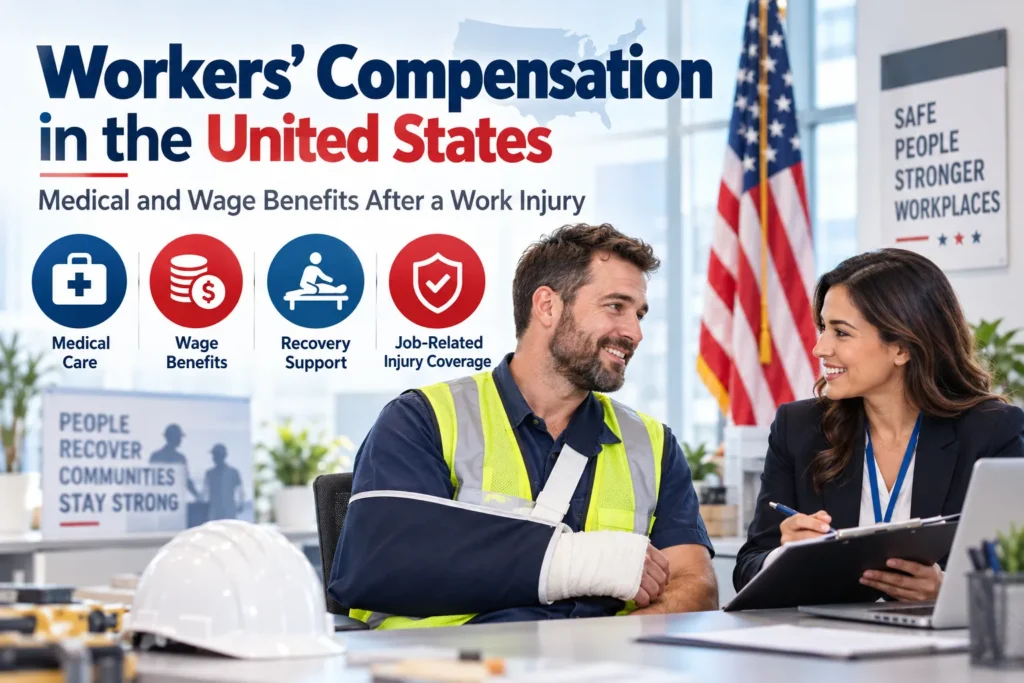
Workers’ Compensation is a system of insurance and benefits designed to help employees who are injured or become ill because of their job. In the United States, workers’ compensation rules are generally handled at the state level, which means eligibility, benefits, filing deadlines, and procedures can vary depending on where a person works.
For most private-sector employees, the appropriate state workers’ compensation agency is the main source of information. Federal employees and certain other workers may be covered under separate federal programs administered by the U.S. Department of Labor (DOL). (dol.gov)
🩺 What Is Workers’ Compensation?
Workers’ Compensation is intended to provide financial and medical support when a worker suffers a work-related injury or occupational illness.
Depending on the applicable state or federal program, benefits may include:
- 🏥 Medical treatment
- 💵 Partial wage replacement
- 🦴 Rehabilitation services
- ♿ Disability benefits
- 👨👩👧 Survivor or death benefits
- 🔄 Return-to-work assistance
The exact benefits depend on the law that applies to the worker.
👷 Who May Be Covered?
Coverage varies by state, employer, and type of employment.
Many employees are covered through their employer’s workers’ compensation insurance, but some categories of workers may be subject to different rules.
Factors can include:
- Employment status
- Employer size
- State law
- Type of occupation
- Whether the injury happened while performing job duties
- Whether the worker is covered by a federal compensation program
Because the rules differ, workers should verify coverage with their employer and the appropriate government agency.
🚑 What Types of Injuries May Qualify?
Workers’ compensation can apply to many different workplace injuries and illnesses.
Examples may include:
- 🤕 Injuries caused by falls
- 🦴 Sprains or fractures
- 🏗️ Construction-related injuries
- 🧰 Injuries involving tools or machinery
- 💻 Repetitive strain injuries
- 🫁 Occupational illnesses caused by workplace exposure
- 🚗 Certain work-related vehicle accidents
A condition generally needs to have a sufficient connection to the person’s employment, but the legal standard varies by jurisdiction.
💵 Does Workers’ Compensation Replace All Lost Wages?
Usually not.
Workers’ compensation wage benefits commonly replace only a portion of lost earnings when a person cannot work because of a covered injury or illness.
The amount and duration of benefits depend on the applicable program and may be affected by:
- Average weekly wages
- Severity of the disability
- Whether the disability is temporary or permanent
- Ability to return to work
- State benefit limits
🏥 Who Pays for Medical Treatment?
For an accepted workers’ compensation claim, covered medical treatment is generally paid according to the rules of the applicable workers’ compensation system.
Depending on the state, there may be specific rules about:
- Which doctors can provide treatment
- Whether the employer chooses the initial provider
- Referrals to specialists
- Prescription medication
- Physical therapy
- Medical examinations
Workers should follow the claim instructions carefully to avoid delays.
📝 What Should You Do After a Work Injury?
Reporting the injury quickly is important.
A worker should generally:
- 🚨 Get emergency medical care if needed.
- 👔 Notify the employer or supervisor as soon as possible.
- 📝 Complete any required accident or injury report.
- 📄 Keep medical records and related documents.
- 🏥 Follow authorized medical treatment.
- 📅 Pay attention to filing deadlines.
Deadlines can be strict and vary considerably by state.
🇺🇸 What About Federal Employees?
Federal civilian employees are generally covered by the Federal Employees’ Compensation Act (FECA) rather than a state workers’ compensation program.
FECA is administered by the Office of Workers’ Compensation Programs (OWCP) within the U.S. Department of Labor. It can provide medical benefits, wage-loss compensation, vocational rehabilitation, and survivor benefits for eligible federal employees with work-related injuries or occupational diseases. (dol.gov)
Separate federal laws also cover certain maritime workers, coal miners, and other specific groups. (dol.gov)
⚠️ Is Workers’ Compensation the Same in Every State?
No.
This is one of the most important points. Workers’ Compensation is not one single nationwide program for most employees.
States establish their own:
- Eligibility standards
- Benefit amounts
- Filing procedures
- Medical care rules
- Appeal processes
- Deadlines
The U.S. Department of Labor provides information and links to the appropriate workers’ compensation authorities. (dol.gov)
✅ Where Can Workers Get Official Information?
Workers should first identify whether they are covered by a state workers’ compensation program or a federal program.
The U.S. Department of Labor’s Workers’ Compensation page provides official information about federal programs and resources for locating state workers’ compensation offices.
Workers’ Compensation
Check official information about work-related injuries, medical benefits, wage replacement, federal workers’ compensation and state program resources in the United States.
Official source: U.S. Department of Labor