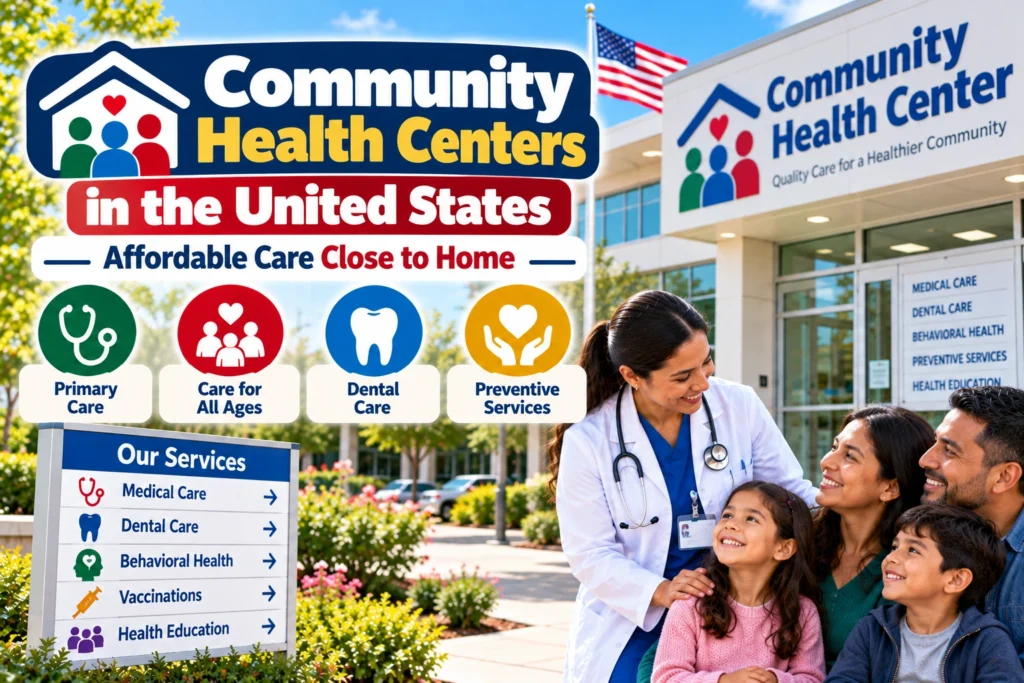
Community Health Centers, also known as Health Centers, are an important part of the U.S. health care system. They provide primary and preventive medical services to millions of people, especially in communities where access to health care may be limited.
These centers receive support through the Health Resources and Services Administration (HRSA) and are designed to serve patients regardless of whether they have private insurance, Medicaid, Medicare, or no insurance at all. (hrsa.gov)
🩺 What Are Community Health Centers?
Community Health Centers are local health care organizations that provide primary care services in medically underserved areas.
Their goal is to make health care more accessible, especially for people who may face barriers such as low income, lack of insurance, rural location, or limited access to doctors.
Services can vary by location, but many centers provide:
- 👨⚕️ Primary medical care
- 👶 Pediatric care
- 👩 Women’s health services
- 🦷 Dental care
- 🧠 Mental health services
- 💊 Pharmacy support
- 🧪 Preventive screenings and lab services
- 🤰 Prenatal and maternity care
Many health centers also connect patients with social support services and local community resources. (hrsa.gov)
💙 Who Can Receive Care?
One of the most important features of Community Health Centers is that they are designed to serve a broad range of patients.
People may receive care even if they:
- Do not have health insurance
- Have Medicaid or Medicare
- Have private health insurance
- Have limited income
- Live in a rural or underserved area
Health centers are required to provide services regardless of a patient’s ability to pay.
This does not always mean that care is completely free. Many centers use a sliding fee discount program, where the amount a patient pays may be adjusted based on income and family size. (bphc.hrsa.gov)
💵 How Does the Sliding Fee Scale Work?
The sliding fee scale is designed to help make care more affordable for patients with lower incomes.
A health center may ask for information about household income and family size. Based on that information, the patient may qualify for reduced charges.
The exact cost depends on the individual health center and the services received.
This system can be especially useful for people who do not qualify for Medicaid but still have difficulty paying full medical costs.
🏥 What Kind of Care Is Available?
Community Health Centers focus heavily on preventive care and ongoing medical support.
Patients may receive routine checkups, vaccinations, blood pressure monitoring, diabetes care, cancer screenings, prenatal care, behavioral health support, and treatment for common illnesses.
Some centers also provide specialty services or referrals when more advanced treatment is needed.
The goal is to help patients receive care early, before a health problem becomes more serious.
🧠 Mental Health and Behavioral Health Services
Many Community Health Centers include behavioral health services as part of their care model.
This can include counseling, substance use treatment, mental health screenings, and referrals to additional services.
Integrating mental and physical health care can help patients receive more complete support in one location.
📍 How Can You Find a Health Center Near You?
HRSA provides an official Find a Health Center tool that allows people to search for federally funded health centers by location.
Users can enter a city, ZIP code, or address to find nearby health centers and view contact information.
This is one of the easiest ways to locate affordable primary care in the United States. (findahealthcenter.hrsa.gov)
👨👩👧 Why Are Community Health Centers Important?
These centers play an important role in reducing barriers to medical care.
They support families, older adults, children, pregnant women, and people living with chronic conditions. They also help communities with fewer health care resources receive regular medical attention.
For many patients, Community Health Centers can become their main source of primary care.
✅ Important Information Before Visiting
Before visiting a health center, it is helpful to contact the location directly to ask about:
- Appointment availability
- Required documents
- Insurance accepted
- Sliding fee eligibility
- Services offered
- Current operating hours
Community Health Centers
Find official information about affordable primary care, preventive services, mental health support, dental care, and sliding fee programs at Community Health Centers across the United States.
Official source: Health Resources and Services Administration (HRSA)